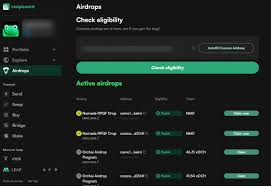

Understanding Crypto Airdrop Eligibility Checkers
Crypto projects sometimes give away free tokens. This is called an airdrop. They do this for many reasons.
It could be to reward early users. It might be to spread awareness of their new project. Or they might want to build a larger community quickly.
Not everyone gets these free tokens. Projects set specific rules. These rules decide who is eligible.
For example, you might need to have used a certain platform. Maybe you had to hold a specific coin. Or you might have needed to perform a certain task.
Finding out if you meet these rules can be tough. You have to look at the project’s announcement. You need to understand their criteria.
Then you might need to check your own wallet history. This takes time and effort.
That’s where an airdrop eligibility checker comes in. It’s a tool. It makes this checking process much easier.
You give it your wallet address. It looks at your blockchain activity. Then it tells you if you qualify.
It’s like having a personal assistant for airdrops.
How Do These Checkers Work?
These tools connect to the blockchain. They read public data. Your wallet address is a public key on the blockchain.
When you make a transaction, it’s recorded there. The checker can see if your address has interacted with certain smart contracts. It can see if you held specific tokens at a certain time.
The project that is doing the airdrop will announce its rules. These rules are called criteria. For instance, a rule might be: “Users who traded on our decentralized exchange before January 1st are eligible.” The eligibility checker is programmed with these exact criteria.
When you enter your wallet address, the checker asks the blockchain many questions. Did this address interact with the X smart contract? Did it hold Y token on Z date?
Did it perform transaction A? Based on the answers, it tells you if you pass.
It’s important to know that these checkers rely on the information available on the blockchain. They cannot see private information. They only see what is publicly recorded.
This makes them a safe way to check.
Key Functions of an Airdrop Checker
Data Scan: Reads your wallet’s transaction history on the blockchain.
Criteria Matching: Compares your activity against the airdrop rules.
Eligibility Report: Shows you if you qualify and often why.
Project Discovery: Some checkers list ongoing or upcoming airdrops.
My Own Airdrop Adventure: A Lesson Learned
I remember when a big DeFi project announced a massive airdrop. Everyone was buzzing. I was using their platform quite a bit back then.
I thought, “This is it! I’m definitely getting a good chunk of tokens.” But I was so busy. I had a lot of other projects I was tracking.
I kept putting off checking. I thought I’d get to it later. Days turned into a week.
Then the claim period started closing. I finally went to their website. I typed in my wallet address.
My heart sank. The checker said I was not eligible.
I was so annoyed with myself. The criteria were simple. I had done everything they asked.
But I missed the specific window for checking. Or maybe I made a small mistake in my usage that I didn’t even realize. If I had used an airdrop eligibility checker early on, I would have known for sure.
It would have saved me that disappointment.
This experience taught me a valuable lesson. Don’t wait. Use the tools available.
They are there to help. They save you time and prevent missed opportunities. Even small actions can matter for airdrops.
A checker helps you see if those small actions counted.
Different Types of Airdrop Eligibility Checkers
Not all checkers are built the same. Some are very basic. Others are quite advanced.
Understanding the differences helps you choose the right one.
Some checkers are part of larger platforms. These platforms might track many different crypto events. They often provide news and analysis too.
They might have a specific section for airdrop checks.
Other checkers are standalone tools. They focus only on eligibility. You visit their site, enter your wallet, and get your results.
These are often simpler and faster to use.
A really helpful type of checker is one that shows you why you are or aren’t eligible. For example, it might say, “You are eligible because you made 5 transactions on the mainnet.” Or, “You are not eligible because you did not hold the required token on April 1st.” This kind of feedback is gold. It helps you understand the project’s logic.
Some checkers might even list upcoming airdrops. They tell you the criteria beforehand. This lets you prepare.
You can start taking actions now to become eligible for future drops. This proactive approach is key.
When to Use a Checker
After an Airdrop Announcement: To see if you meet the criteria.
Before a Claim Period Ends: To confirm eligibility before it’s too late.
Proactively for Future Airdrops: To understand requirements for upcoming projects.
When You Suspect Eligibility: If you used a platform that might offer an airdrop.
Finding Reputable Airdrop Eligibility Checkers
The crypto space can be tricky. Not everyone online has good intentions. It’s super important to use safe and trustworthy tools.
How do you find them?
Start with well-known crypto news sites. Many reputable crypto news outlets and blogs will mention reliable tools. They usually do their own research first.
Look for mentions from sites like CoinDesk, CoinTelegraph, or prominent crypto influencers who focus on research, not just hype.
Check community forums. Reddit is a great place. Search for “airdrop eligibility checker” on subreddits like r/CryptoCurrency or specific project subreddits.
See what other users are recommending. Look for discussions where people share positive experiences.
Be wary of new, unknown checkers. If a tool asks for your private keys or seed phrase, run away! Never share those.
A legitimate checker only needs your public wallet address.
Look at the checker’s own history and website. Does it look professional? Is there contact information?
Does it explain how it works? A good tool is transparent.
I once saw a slick-looking site. It promised to find all the airdrops I was eligible for. I typed my address in.
Then it asked me to “verify” my wallet by sending a small amount of ETH. Red flag! I closed the tab immediately.
That was a scammer trying to steal funds. Always be skeptical.
What Information Do You Need?
The primary piece of information you will always need is your public wallet address. This is the address you give to others to receive crypto. It looks like a long string of letters and numbers, for example, `0x123.abc`.
Make sure you are checking the correct wallet address. If you have multiple wallets, double-check which one you used for the specific platform or activity related to the airdrop.
Some advanced checkers might ask for information about the blockchain network. For example, are you checking for an Ethereum airdrop? Or a Solana airdrop?
Most checkers will let you select the network.
Some might also ask for your social media handles if the airdrop required following them on Twitter or joining their Discord. However, the core function of an eligibility checker is to verify on-chain activity.
Essential Information for Checkers
Public Wallet Address: Your unique crypto address (e.g., 0x.)
Blockchain Network: The network your wallet is on (e.g., Ethereum, Polygon, BNB Chain).
Optional: Specific tokens held or transaction IDs if the checker supports deeper dives.
Common Airdrop Criteria You Might Encounter
Projects get creative with their airdrop rules. Knowing these common criteria will help you understand what a checker is looking for.
Early Adopter Rewards: If you were one of the first users of a platform or protocol, you might be eligible. This rewards people who took a risk on a new project.
Transaction Volume: Some projects reward users who have traded a certain amount of value on their platform. This shows active participation.
Specific Token Holdings: Holding a particular cryptocurrency can make you eligible. For example, a project built on the Ethereum network might reward ETH holders.
Interacting with Smart Contracts: Simply performing actions like swapping tokens, providing liquidity, or staking on a decentralized application (dApp) can qualify you. The checker will look for these specific smart contract interactions.
Referrals: Some airdrops reward users who invited others to the platform.
Social Media Engagement: While not always checked by blockchain-based tools, some airdrops require you to follow the project on Twitter, retweet posts, or join their Discord server. Airdrop checkers typically focus on on-chain activity, but this is a common requirement set by projects.
NFT Ownership: Owning certain Non-Fungible Tokens (NFTs) can also be a condition for eligibility.
In my experience, the most common criteria are simple usage. Did you swap tokens? Did you provide liquidity?
Did you use the platform more than once? These are easy for checkers to verify.
When Is an Airdrop Not Really an Airdrop? (Scams to Watch Out For)
This is super important. The word “airdrop” is used and abused. Some offers that look like airdrops are actually scams.
A real airdrop eligibility checker will never ask for your private keys or seed phrase. It will also never ask you to send crypto to claim a free amount.
The “Send Us Crypto to Receive More” Scam: This is a classic. A scammer will promise you tokens if you send them some of your existing crypto first. They say it’s to “verify your wallet” or “cover gas fees.” They will take your crypto and send nothing back.
Never fall for this.
Fake Airdrop Checkers: As I mentioned, some websites are designed to look like legitimate checkers but are malicious. They might try to trick you into connecting your wallet to a harmful site. This could allow them to drain your funds.
Always check the URL and reputation.
Phishing Links: Be careful of links shared in Discord, Telegram, or email. Scammers create fake project pages or login portals that look real. They want you to enter your wallet details or click a malicious link.
Unrealistic Promises: If an airdrop promises an absurdly large amount of tokens for very little effort, it’s probably a scam. Genuine projects usually have reasonable reward structures.
I learned this the hard way when I was newer to crypto. I saw a social media post about a “guaranteed” airdrop of 10,000 tokens. All I had to do was send 0.1 ETH to a specific address.
I almost did it! Thankfully, a more experienced friend stopped me. They explained that real airdrops don’t work like that.
They are given freely, not sold.
Spotting Airdrop Scams
Requests for Private Keys/Seed Phrases: Always a scam.
“Send Crypto to Receive Crypto”: Never legitimate for airdrops.
Unsolicited Links: Be highly suspicious of unexpected links.
Unrealistic Rewards: If it sounds too good to be true, it probably is.
Poorly Designed Websites/Messages: Often a sign of amateur scammers.
Navigating the World of Checkers: Tips for Success
Using an airdrop eligibility checker is a great way to stay on top of opportunities. Here are some tips to help you get the most out of them.
Use Multiple Checkers: Different checkers might have access to slightly different data or use different algorithms. Checking with a couple of reputable tools can give you a more complete picture.
Check Regularly: Projects announce airdrops frequently. New criteria might be added, or claim periods might open. Make it a habit to check for new airdrops and your eligibility.
Understand the Claim Process: Eligibility is just the first step. Once you know you qualify, you need to know how to claim your tokens. This usually involves visiting a specific claim page on the project’s official website and connecting your wallet.
Always verify the official website URL.
Be Patient: Some airdrops have long waiting periods. Tokens might not be distributed immediately after you are deemed eligible.
Keep Your Wallet Secure: This is crucial. Use a hardware wallet for significant amounts of crypto. Enable two-factor authentication where possible.
And never share your private keys or seed phrase.
I found a great checker once that also listed upcoming airdrops. It told me about a project that was going to reward users who staked a specific token. I wasn’t holding that token at the time.
So, I bought some and staked it. A few weeks later, that project did a massive airdrop. I was eligible because I had followed the advice I found.
It was a small amount of money to get started, but it paid off.
The Role of Data and Privacy
When you use an airdrop eligibility checker, you are giving it your public wallet address. This is not sensitive information. It’s like giving someone your bank account number to see if you have money in it.
The bank (blockchain) will tell them yes or no, but they can’t access your funds.
However, it’s important to understand what the checker can see. It can see all transactions associated with that address on the public blockchain. This includes tokens sent and received, smart contract interactions, and gas fees paid.
Some advanced checkers might build a profile of your on-chain activity. They might see if you are a heavy DeFi user, an NFT collector, or mostly a holder. This data helps them determine your eligibility for different types of airdrops.
Privacy concerns are valid in crypto. But for eligibility checking, the focus is on public, on-chain data. As long as the checker is reputable and only asks for your public address, your privacy should be maintained.
Avoid any checker that asks for more.
Data Privacy Checklist
ONLY Public Address Needed: A legitimate checker asks for this.
No Private Keys/Seed Phrases: Never share these.
Reputable Source: Stick to well-known and reviewed tools.
Clear Privacy Policy: Good checkers explain how they use data.
When Should You Worry About an Airdrop?
Worry is a strong word, but there are times to be extra cautious. If a project is very new and has almost no community or activity, an airdrop might be a way to generate quick hype before disappearing.
If the criteria for the airdrop are extremely vague, it’s a red flag. For example, “users who are good people” doesn’t mean anything. Clear, verifiable on-chain actions are what legit projects use.
Also, be cautious if the airdrop requires you to stake a large amount of a new, unproven token. This can be a way to pressure you into investing in something risky.
I always look for a project that has a clear roadmap, active social media engagement, and has been around for a bit, even if it’s just a few months. This gives me more confidence that the airdrop is genuine and that the project will continue to develop.
Real-World Scenarios Where Checkers Are Essential
Imagine you’ve been using a new decentralized exchange (DEX) for a few months. You swap tokens regularly. You might have also provided some liquidity.
You hear rumors that the DEX is planning an airdrop for its early and active users. How do you know if you qualify?
This is where a checker shines. You take your wallet address, enter it into a trusted eligibility checker, and select the relevant blockchain. The checker scans your activity on that DEX’s smart contracts.
It might report: “Eligible: You have made 15 swaps and provided 2000 USD in liquidity.”
Another scenario: A new blockchain goes live. You participated in its testnet phase. You helped find bugs.
You sent transactions on its test network. Months later, the mainnet launches, and they announce an airdrop for testnet participants. You might not remember every single testnet transaction.
A checker can look back at your wallet’s interaction with the testnet contracts and confirm your eligibility.
Or consider a popular NFT marketplace. You bought and sold a few NFTs on it. They decide to launch their own token.
They want to reward their most active traders. An airdrop eligibility checker can confirm if your trading volume or number of transactions meets their threshold.
Quick Tips for Claiming Airdropped Tokens
Once you’ve confirmed your eligibility, the next step is claiming. Here are a few tips to make this process smoother.
Verify the Official Website: Scammers create fake claim pages. Always double-check the URL. Look for it on the project’s official Twitter or Discord.
Check Gas Fees: Claiming tokens usually requires paying a network fee, often called “gas.” This fee varies depending on the blockchain and how busy it is. Make sure you have enough of the native coin (like ETH for Ethereum) in your wallet to cover the gas.
Read the Instructions Carefully: Each airdrop has specific instructions for claiming. Follow them precisely.
Don’t Rush: If there’s no immediate rush, wait for a period of lower network congestion to claim. This can save you money on gas fees.
Use a Reputable Wallet: Ensure your wallet is secure and up-to-date.
I once had to claim tokens from a project. The gas fees were crazy high that day because of a major NFT mint. I waited two days.
The fees dropped significantly. I claimed my tokens for a fraction of the cost. Patience truly pays off.
Frequently Asked Questions About Airdrop Eligibility Checkers
What is the primary purpose of an airdrop eligibility checker?
The main goal is to help users quickly see if their cryptocurrency wallet and on-chain activities qualify them for free tokens distributed by a new or existing crypto project. It automates the process of checking against a project’s specific rules.
Can an airdrop eligibility checker show me if I missed an airdrop?
Yes, some checkers can analyze your past activity on the blockchain. If an airdrop has already occurred and its criteria are public, a checker might be able to tell you if you would have been eligible based on your historical actions.
Do I need to connect my wallet to an airdrop eligibility checker?
No, a reputable checker will only ask for your public wallet address. You should never connect your wallet or share your private keys or seed phrase with any checker or website claiming to be an airdrop service.
How accurate are airdrop eligibility checkers?
Their accuracy depends on the checker and the clarity of the airdrop criteria. If the project’s rules are clear and the checker is well-programmed, they are usually very accurate. However, always cross-reference with the official project announcements if possible.
Can airdrop checkers find airdrops I didn’t know about?
Some advanced checkers can scan the blockchain for patterns of activity that might indicate eligibility for airdrops you haven’t heard of. They can also list ongoing or upcoming airdrops based on data they track.
What should I do if an eligibility checker says I am NOT eligible?
If a checker says you are not eligible, it’s likely based on the specific criteria set by the project. You might not have met a certain requirement, like holding a specific token or making a minimum number of transactions. You can review the project’s official announcement for their exact rules.
Final Thoughts on Finding Crypto Opportunities
The world of crypto airdrops can be exciting and rewarding. Using an airdrop eligibility checker is a smart way to navigate this landscape. It saves you time and helps you avoid disappointment.
Always prioritize safety and use only trusted tools. Happy hunting for those free tokens!