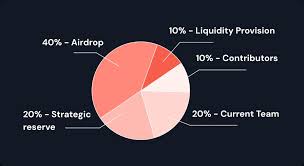

This guide will break down exactly what airdrop allocation is. We’ll cover why projects do it. You’ll learn what you need to do to get some.
We’ll also talk about what to watch out for. By the end, you’ll feel much more confident about understanding and finding crypto airdrops.
Airdrop allocation refers to how a cryptocurrency project decides to distribute its free tokens to users. This often involves setting specific rules and criteria that people must meet to be eligible to receive a share of the allocated tokens. It’s a key part of how many new crypto projects gain traction and reward early supporters.
What is Airdrop Allocation?
Think of airdrop allocation like a big party. The project is hosting, and they have a lot of party favors (tokens) to give away. Not everyone gets the same amount.
Allocation is the plan for who gets what and why.
Projects decide on rules. These rules guide how they hand out their tokens. It’s not random.
There are reasons behind every decision. These reasons help the project grow. They also help reward people who help the project.
The goal is to get their tokens into the hands of real users. They want people who will use the network. They also want to thank early fans.
This helps build a strong community right from the start. A well-planned allocation can make a big difference for a new crypto project.
Why Do Crypto Projects Do Airdrop Allocations?
Projects use airdrops for several important reasons. It’s a smart way to kickstart their ecosystem. It helps them get noticed in a crowded market.
Free tokens are a big draw for people. This gets more eyes on their project.
One main reason is to boost adoption. When people get free tokens, they often try out the project’s platform. They might use its features or services.
This helps create real users. It shows that the project has value.
Another key reason is community building. Airdrops reward early supporters. These are often people who believed in the project from the start.
They might have tested beta versions or provided feedback. Giving them tokens makes them feel valued. It turns them into loyal advocates.
They become more invested in the project’s success.
Projects also use airdrops for decentralization. By distributing tokens widely, no single person or group holds too much power. This is important for many blockchain projects.
It helps prevent control by a few. A broad distribution is a core part of many crypto philosophies. It spreads ownership and governance.
Finally, airdrops can create buzz. They generate news and social media discussion. This helps attract new users and investors.
It’s a form of marketing. But it’s marketing that also directly rewards the community. It’s a win-win situation if done right.
Airdrop Allocation Goals
Goal 1: Increase User Adoption
Get tokens into the hands of active users.
Goal 2: Build a Strong Community
Reward early believers and supporters.
Goal 3: Promote Decentralization
Distribute tokens widely to avoid concentration of power.
Goal 4: Generate Buzz and Awareness
Create excitement and attract new attention.
How Airdrop Allocations Work
The process starts with the project team. They decide on the total amount of tokens to be airdropped. Then, they figure out how to share them.
This is the core of airdrop allocation.
They set specific criteria. These are like the “rules of the game.” People need to meet these rules to be eligible. Common criteria include things like holding another specific token.
Some airdrops require users to interact with a certain decentralized application (dApp). Others might ask you to join a Discord server or follow social media accounts.
The allocation method itself can vary. Some projects use a flat distribution. Everyone who qualifies gets the same amount.
Others use a tiered system. Those who did more or met tougher criteria get a larger share.
Sometimes, allocation is based on points. You earn points for certain actions. The more points you have, the more tokens you might get.
This encourages deeper engagement with the project. It rewards those who contribute more value.
It’s crucial to understand these rules. If you miss even one tiny detail, you might not get any tokens. The project will announce these rules clearly.
You just need to read them carefully. And sometimes, that’s the hardest part.
Common Airdrop Allocation Criteria
Projects get creative with their criteria. They want to attract the right kind of users. Here are some common ways they decide who gets tokens:
Holding Specific Cryptocurrencies
Some airdrops require you to hold certain tokens in your wallet. For example, a project building on Ethereum might airdrop to holders of ETH. Or they might target holders of a specific DeFi token.
This shows you are already involved in the crypto space.
Interacting with a Protocol or dApp
Many airdrops target users of a specific blockchain protocol or decentralized application. If a project is launching a new feature, they might airdrop to users who already used its previous version. Or they might reward users of competing dApps.
This shows you understand and use these kinds of services.
Completing Social Tasks
Joining a project’s Discord or Telegram group is very common. Following them on Twitter and retweeting a post also counts. Sometimes, you might need to invite friends.
These tasks help spread the word about the project.
Participating in Testnets or Betas
Testing a new blockchain or dApp before it launches is valuable. Projects often reward testers with airdrop allocations. This is because testers help find bugs and improve the product.
It’s a direct way to get active community members.
NFT Holders
If a project has an NFT component, holders of specific NFTs might be eligible. This is common for projects with a strong art or collectible focus. Owning a related NFT shows a certain level of commitment.
Early Adopters and Contributors
This is a broad category. It can include people who provided liquidity to a decentralized exchange. It can also include developers who contributed code.
Or even people who helped translate project documents. These are often the most valuable community members.
Quick Scan: Airdrop Eligibility Checklist
- Wallet Check: Do you need to hold a specific coin/token?
- Protocol Use: Have you used the target dApp or platform?
- Social Engagement: Are you following on social media? Joined Discord/Telegram?
- Testnet Participation: Did you join a beta or test network?
- NFT Ownership: Do you own any relevant NFTs?
- Contribution History: Have you helped the project in the past?
My First Airdrop Experience: A Tale of Almost Missing Out
I remember my first real attempt at snagging an airdrop. It was for a new decentralized exchange (DEX). They announced they were giving tokens to early users.
My eyes lit up. Free money! I’d been using DEXs for a while, so I figured I was a shoe-in.
The announcement came on Twitter. It was late, and I skimmed the thread. It mentioned interacting with the platform.
I’d used their swap feature a few times. That seemed enough. I closed Twitter feeling pretty good about myself.
I thought, “Yep, tokens incoming.”
A few weeks passed. Then, I saw posts from others showing off their new tokens. My heart sank.
I checked my wallet. Nothing. I went back to the announcement.
This time, I read every single word. My stomach dropped. They also required users to add liquidity to a specific trading pair.
And they had to do it for a minimum amount of time.
I had only used the swap function. I hadn’t provided any liquidity. I had completely missed a key step.
That feeling of missing out was brutal. It was a sharp lesson. Skimming is not reading.
And in crypto, details matter immensely. It taught me to always, always read the fine print. Especially when free tokens are involved.
That sting of a missed opportunity is a powerful teacher.
Different Types of Airdrop Allocation Models
Projects don’t all use the same method for allocating tokens. The way they divide the tokens can differ greatly. This affects how much people receive.
It also influences who receives tokens at all.
1. Flat Distribution
This is the simplest approach. Everyone who meets the basic requirements gets the exact same amount of tokens. It’s fair in one way.
It rewards everyone equally for meeting the minimum bar. However, it doesn’t reward users who were more active or contributed more.
Example: 1000 tokens are airdropped. 1000 users qualify. Each user gets 1 token.
This is straightforward. It ensures broad distribution quickly. It’s good for getting tokens to as many people as possible.
2. Pro-Rata (or Tiered) Distribution
This model is more complex. Tokens are divided based on some measure of user activity or contribution. For example, users might be divided into tiers.
Tier 1 gets X tokens. Tier 2 gets Y tokens, and so on. Or, it could be based on how much volume a user traded on the platform.
This method rewards users who were more engaged. It acknowledges their greater contribution. It can lead to larger allocations for power users.
But it can also be harder to calculate and implement fairly. It also means some users get nothing if they don’t reach a certain tier.
3. Token Swap
This is less common now but was popular early on. Users could “swap” their existing tokens for a new project’s tokens. For example, you might send 1 old token to receive 10 new tokens.
The allocation was based on the quantity and type of tokens swapped.
This was a way to encourage users to get rid of older, less useful tokens. It also ensured that early holders of significant cryptocurrencies were rewarded. It required users to actively participate in the swap process.
4. Point-Based Systems
Many newer projects use point systems. Users earn points for completing various tasks. These tasks could be anything from trading on the platform to referring friends.
Or even participating in governance votes. The more points you earn, the larger your share of the airdrop.
This model is very popular because it encourages a wide range of positive behaviors. It’s flexible. Projects can assign different point values to different actions.
This allows them to guide user behavior more effectively. The allocation is directly tied to your “score.”
5. Random Selection
While not strictly an allocation model for everyone, some projects use random lotteries. A large pool of eligible users is created. Then, a smaller group is randomly selected to receive tokens.
This can be part of a larger airdrop strategy.
It adds an element of chance. It can be used to reward a few lucky individuals. However, it can also frustrate users who put in effort but don’t win.
It’s often seen as less fair than other methods.
Airdrop Allocation Styles at a Glance
Flat: Equal share for all eligible.
Pro-Rata/Tiered: Share based on activity level or tier.
Token Swap: Exchange old tokens for new ones.
Point-Based: Allocation tied to earned points from tasks.
Random: Small group selected by chance.
Navigating Airdrop Allocation Rules: What to Look For
Understanding the rules for any given airdrop allocation is crucial. It’s like reading a treasure map. You need to know the symbols and the path.
Eligibility Criteria: This is the first thing to check. Are you even able to participate? Do you need to hold a certain coin?
Have you used the protocol before? What date is the snapshot taken? This date is super important.
It shows who held assets or used the platform at a specific time.
Token Amount: How many tokens are being airdropped in total? How many are allocated per person? Is it a fixed amount or variable?
Knowing this helps you set expectations. Don’t expect to get rich from a tiny allocation. But don’t dismiss a small allocation if it’s truly free.
Distribution Date: When will the tokens be sent to your wallet? This can take weeks or even months. Be patient.
Don’t fall for scams promising instant tokens. They are usually fake. Trust only official announcements.
Verification Process: How will the project verify your eligibility? Do you need to connect your wallet? Do you need to submit a form?
Understand the steps required. Make sure you provide the correct information. A wrong wallet address means no tokens.
Unstaking or Lock-up Periods: Sometimes, tokens received from an airdrop are locked. You can’t sell them immediately. They might unlock over time.
Or you might need to complete further actions. Always check for any lock-up periods.
Taxes: In many countries, receiving airdropped tokens is a taxable event. You might have to pay taxes on the value of the tokens when you receive them. Consult a tax professional.
This is very important for compliance.
Real-World Context: Where Airdrop Allocation Matters
Airdrop allocation isn’t just a theoretical concept. It plays out in real homes and real user experiences every day. Think about how it impacts different people.
For a student trying to get into crypto, an airdrop can be a gateway. They might not have much money to invest. But they have time to learn and interact with new platforms.
A well-structured airdrop allocation that rewards engagement can give them their first significant crypto holdings. This can be a powerful learning tool and an initial capital boost.
For a seasoned trader, an airdrop might be a way to get a head start on a new project. They might participate in testnets or provide liquidity. They understand the value of early access.
Their expertise allows them to navigate complex requirements. They see airdrops as a potential reward for their knowledge and risk-taking.
In a household, one partner might be deeply involved in crypto. They might spend hours researching. They could be using various dApps.
An airdrop they qualify for could result in tokens that help the family save for a goal. Or it could fund further exploration into the crypto space. It becomes part of their financial strategy.
However, it’s not always a smooth ride. Imagine someone living in a rural area with slow internet. They might struggle to meet requirements for real-time interaction-based airdrops.
Or they might be a senior citizen who finds the technical aspects confusing. For them, complex allocation rules can be a barrier. This highlights the need for projects to consider accessibility in their designs.
The environment also plays a role. In regions with high inflation, people might see airdrops as a way to acquire assets that hold value better than their local currency. This makes the airdrop allocation particularly significant for them.
It’s not just free money; it’s a potential hedge against economic instability.
Airdrop Allocation Scenarios
Scenario 1: The Student
Uses time to interact with dApps, earns first crypto.
Scenario 2: The Trader
Leverages expertise for potentially larger allocations.
Scenario 3: The Saver
Airdrops contribute to family financial goals.
Scenario 4: The Tech-Challenged User
May face barriers due to complex technical requirements.
What This Means for You: Normal vs. Concerning Airdrop Allocations
Understanding when an airdrop allocation is good and when to be wary is key. Not all airdrops are created equal.
When an Airdrop Allocation Seems Normal:
Clear Rules: The project clearly states the requirements. These are easy to find and understand. You know exactly what you need to do.
Reasonable Tasks: The tasks required make sense for the project. They align with gaining users or testing services. Things like using a dApp or joining a community forum are normal.
Realistic Amounts: The allocated tokens are not an insane amount of money for simple tasks. You won’t become a millionaire for retweeting. But you might get enough to explore the project.
Project Legitimacy: The project has a real website, a whitepaper, and a working product or clear roadmap. They are transparent about their team and goals.
Timing: The distribution happens as promised. If they say it will take a few weeks, it does. They communicate any delays.
When an Airdrop Allocation Might Be Concerning:
Vague or Changing Rules: The requirements are unclear. They seem to change without good reason. Or they are hidden deep in obscure documents.
Unrealistic Tasks: You are asked to pay money upfront to receive airdrop tokens. This is a huge red flag. Legitimate airdrops are usually free to claim.
Or they only charge gas fees for transactions.
Too Good to Be True: The promised allocation is millions of dollars for very little effort. If it sounds too good to be true, it probably is.
Shady Project: The project has no clear team information. Their website looks unprofessional. They lack a solid roadmap.
They only focus on hype and marketing.
Requests for Private Keys: Never, ever give your private keys or seed phrase to anyone. This is how your crypto is stolen. Legitimate projects never ask for this information.
Unusual Transaction Fees: They ask you to send crypto to a specific address to “activate” your airdrop. This is a scam. They will just take your crypto.
Always do your own research (DYOR). Look into the project’s history. Check community sentiment.
Be skeptical of anything that feels off. Your security and your crypto are more important than any potential airdrop.
Quick Tips for Maximizing Your Airdrop Allocation Potential
While there are no guarantees, you can improve your chances of getting a good airdrop allocation. These tips focus on smart participation.
- Be an Early Adopter: Many airdrops reward early users. Get involved with promising new projects as soon as they launch their testnets or mainnets.
- Engage Authentically: Don’t just complete tasks for tokens. Truly use the platform. Provide thoughtful feedback. Participate in community discussions. Projects often reward genuine engagement.
- Diversify Your Interactions: If a project has multiple features or dApps, try to use as many as are relevant. This can increase your chances of meeting different criteria.
- Read Everything Carefully: I can’t stress this enough. Read the official announcements, FAQs, and any linked documentation. Understand the exact rules and snapshot dates.
- Secure Your Wallets: Use hardware wallets for significant amounts of crypto. Ensure your wallet is secure. Never share your private keys or seed phrase.
- Join Project Communities: Follow projects on Twitter, Discord, and Telegram. This is often where airdrop announcements and details are first shared.
- Track Your Activity: Keep a record of the projects you are interacting with and the dates. This can help you remember which ones might offer an airdrop later.
- Understand Gas Fees: Some actions might require paying transaction fees (gas). Factor this into your decision. Sometimes, the cost of gas might outweigh the potential airdrop value.
Airdrop Power-Up Tips
Be Early: Jump into new projects fast.
Be Real: Use platforms like you mean it.
Be Broad: Try different features of a project.
Be Thorough: Read all the rules.
Be Safe: Keep your keys secret.
Be Connected: Join project social groups.
Frequently Asked Questions About Airdrop Allocation
What is a snapshot date for an airdrop allocation?
A snapshot date is a specific point in time when a project records the blockchain data. This data includes who holds certain tokens, how much they hold, and what actions they have taken. The project uses this snapshot to determine eligibility and the amount of tokens for the airdrop allocation. If you held the required assets or met the criteria before the snapshot, you are likely eligible. If you meet them after, you are not.
Can I get multiple airdrop allocations from one project?
It depends on the project. Some projects might have multiple phases or different types of airdrops. For example, one airdrop might be for early testnet users, and another might be for mainnet users who provide liquidity. Generally, if a project has distinct criteria for different groups or phases, you could be eligible for more than one. Always check the specific project’s announcements.
Are airdrop tokens free money?
Airdrop tokens are essentially free in that you don’t pay for them directly. However, you often invest time and effort to qualify. You might also incur transaction fees (gas fees) for certain actions. Furthermore, the value of airdropped tokens can fluctuate greatly. While they can be a significant gain, they are not guaranteed to be profitable, and their market value can go down.
How do I claim my airdrop tokens after allocation?
Claiming instructions vary by project. Often, after the allocation is determined, the project will provide a link to a claiming interface. You will typically need to connect your cryptocurrency wallet to this interface. The system then checks your eligibility based on the snapshot and allows you to claim your awarded tokens. Be very careful to only use official links provided by the project.
What happens if I have multiple wallets?
If you used multiple wallets for your activities, the project might count them separately. Your eligibility and allocation would be based on the activity in each individual wallet. Some projects might have rules against claiming from multiple wallets if you are the same person. It’s best to follow the project’s specific guidelines to avoid disqualification.
Can I sell airdropped tokens immediately after receiving them?
Not always. Many projects implement lock-up periods or vesting schedules for airdropped tokens. This means you might not be able to sell them for a certain amount of time. This is done to prevent immediate dumping and to encourage long-term holding and participation in the ecosystem. Always check the terms of the airdrop allocation regarding selling restrictions.
Conclusion
Understanding airdrop allocation is about more than just getting free tokens. It’s about how new crypto projects engage with their communities. It’s a strategy to drive adoption, reward users, and build a decentralized network.
By knowing the rules, looking out for red flags, and participating thoughtfully, you can better position yourself to benefit from these opportunities.